Custom PVC Injection Molding

Durable, Cost-Effective PVC Parts. 

Fast quotes, on-time delivery worldwide.


Trusted by global OEMs in 10+ countries

XDL certificates logos png 1200

What is PVC?

Polyvinyl Chloride (PVC) is a widely used thermoplastic polymer that offers excellent durabilitychemical resistance, and cost-effectiveness. In injection molding, PVC is often chosen for applications requiring strong, tough, and weather-resistant parts. It is available in two main forms: rigid PVC (uPVC), used for pipes, profiles, and fittings, and flexible PVC, which contains plasticizers and is used for softer applications like wiring, hoses, and medical devices. PVC is easy to process and can be customized with additives for specific properties, such as UV resistance or flame retardancy.

The main Benefits of PVC for Injection Molding

BenefitDescription
Cost-EffectivenessLow raw material cost and relatively low processing energy requirements.
Flame RetardancyInherent self-extinguishing properties, excellent for electrical/construction uses.
Chemical ResistanceHigh resistance to acids, alkalis, oils, and many solvents.
Electrical InsulationExcellent insulating properties, even in damp environments.
Rigidity & Strength (uPVC)High stiffness, dimensional stability & hardness for structural parts.
Durability & WeatheringGood long-term stability & UV/moisture resistance (with stabilizers).
Versatility via CompoundingProperties easily tailored (flexible to rigid) using additives (plasticizers, impact modifiers, etc.).
Good ProcessabilityFlows well at lower temps (energy saving), requires careful temp control.
RecyclabilityTechnically recyclable (common for post-industrial scrap).

PVC vs PP ABS & PE – Injection Molding Materials Compared

DimensionsPVCPP(Polypropylene)ABS(Acrylonitrile - Butadiene - Styrene)PE(Polyethylene)
Cost - Effectiveness✅ Low raw material cost, mature production process, high cost - effectiveness for large - scale production△ Moderate cost, cost - performance lower than PVC in budget - sensitive scenarios△ Higher cost than PVC, less competitive in low - end mass production△ Cost is relatively higher in some application scenarios compared to PVC
Chemical Resistance(Acid & Alkali)✅ Excellent resistance to acids and alkalis, suitable for chemical - contact environments❌ Weaker than PVC, not ideal for long - term strong chemical exposure❌ Inferior to PVC in long - term water and strong chemical corrosion resistance❌ Less resistant to certain chemicals compared to PVC
Electrical Insulation✅ Good electrical insulation, widely used for wire and cable sheathing△ Has certain insulation but not as good as PVC for professional electrical applications❌ Not as excellent as PVC in electrical insulation performance△ Insulation performance is relatively general for professional electrical use
Hardness Adjustability✅ Can be formulated to produce both soft and hard products, wide application range❌ Mainly for hard products, limited in soft product formulation❌ Mostly for hard products, less flexible in hardness adjustment❌ Generally tends to soft products, hard - product formulation difficult
Processing Difficulty✅ Mature processing technology, low injection and extrusion difficulty, high production efficiency△ Processing needs strict temperature control, relatively higher difficulty△ Processing requires high - end equipment and precise process control△ Processing has certain requirements for equipment and process
Heat Resistance△ Softening temperature around 80℃, need stabilizers during processing✅ Good heat resistance, continuous use temperature up to 110 - 120℃✅ Better heat resistance than PVC in some aspects✅ Certain heat resistance, applicable in some medium - temperature environments
Environmental Resistance(Water)✅ Good water resistance, suitable for building drainage pipes✅ Excellent water resistance❌ Inferior to PVC in long - term water - contact resistance✅ Good water resistance
Application Versatility✅ Covers soft and hard product fields, used in pipes, wire sheaths, artificial leather, etc.△ Mainly in hard product fields like auto parts, household appliances△ Focus on hard product high - performance fields like electronics, automobiles△ Mainly in packaging, pipes, film - related soft - hard mixed fields

Summary:

  • PVC: cost-effective, versatile (soft/hard), strong chemical/electrical resistance; limited by low heat resistance..

  • PP: good heat/water resistance, moderate cost; weaker than PVC in chemical/electrical insulation..

  • ABS: better heat resistance/mechanical strength, higher cost; inferior to PVC in chemical/electrical performance.

  • PE: Strong water resistance, leans soft; lacks PVC’s chemical resistance, electrical insulation, and hardness range.

How We Help Clients Succeed with PVC Injection Molding​

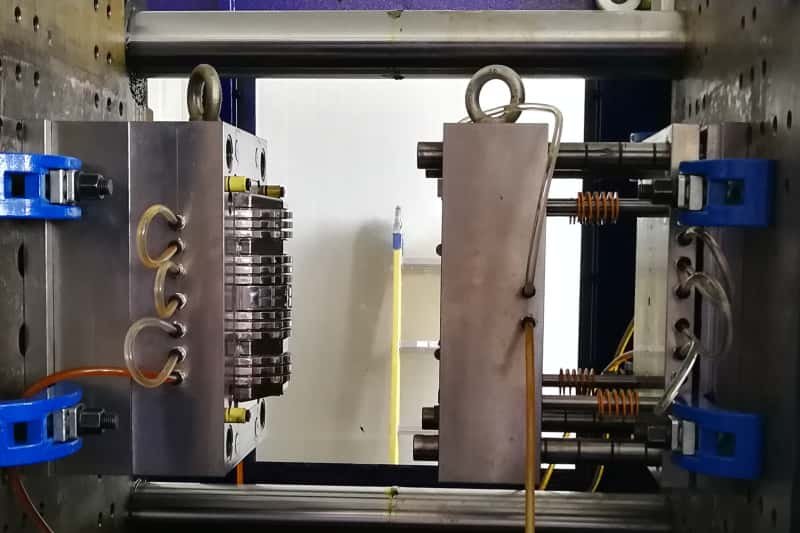
XDL Injection Molding Mold

Applications for PVC Parts​

Contact us today for a consultation or a quote!

We will reply within 24 hours!

Attention: For attachments larger than 20MB, please send them directly to sales@xdlmachinery.com

Contact us now!

You will get our reply within 24 hours.

Attention: For attachments larger than 20MB, please send them directly to inquiries@xdlmachinery.com